




IMF says America’s $39T national debt is actually a global problem — and AI may be the only rescue

5Views
America’s $39 trillion national debt has become a familiar political football—batted around in budget negotiations, invoked at congressional hearings, and largely ignored between elections. But what the International Monetary Fund laid out Wednesday is something more unsettling: The U.S. isn’t an outlier. It’s just the most visible symptom of a global disease.
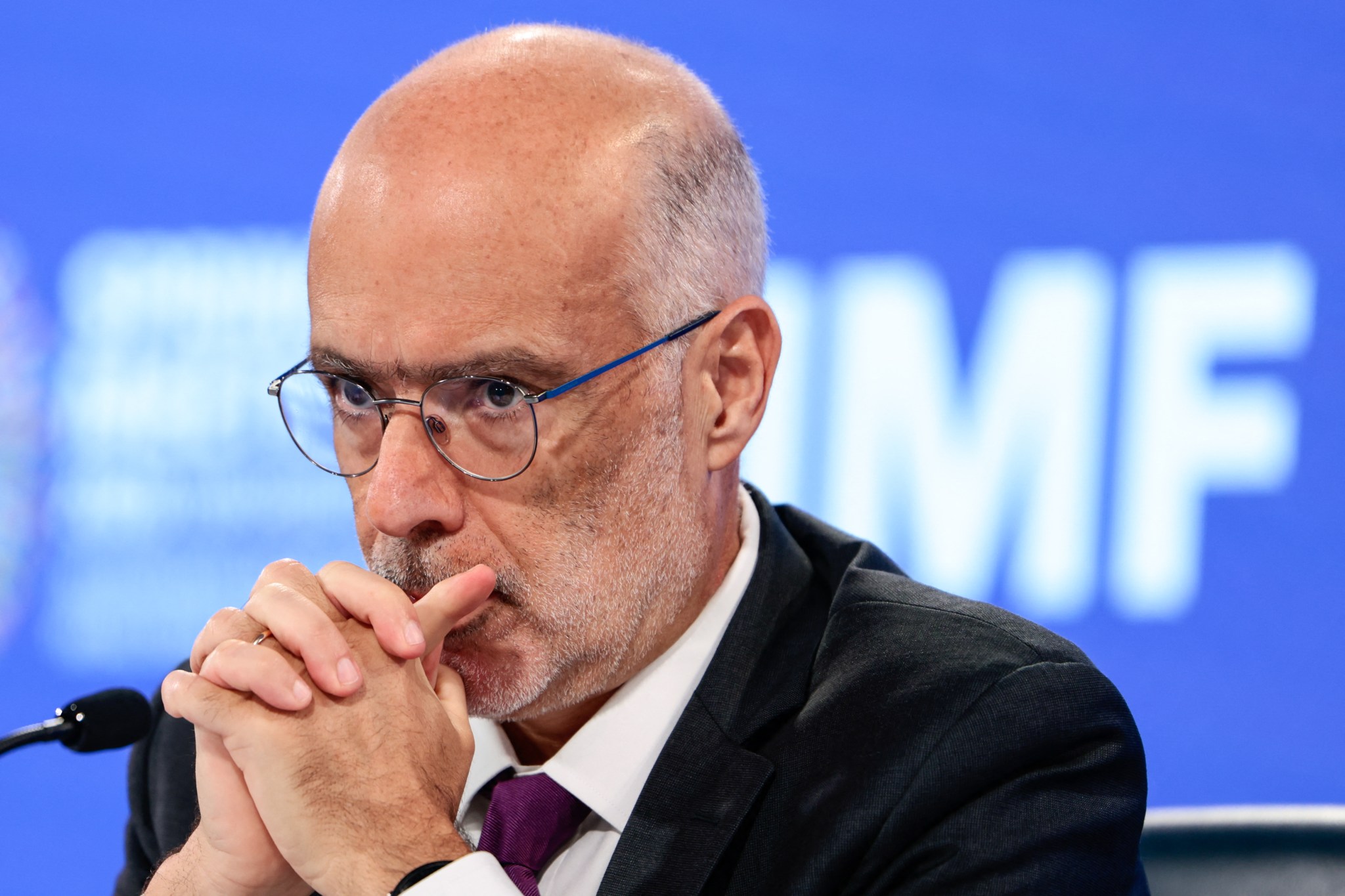
At the spring launch of its biannual Fiscal Monitor, IMF Fiscal Affairs Director Rodrigo Valdez opened with a stark framing: “The world economy is being tested again with the consequences of the war in the Middle East—and this is a world that has less degrees of freedom as public finances are more stretched in many, many countries.”
The fund projected global public debt will hit 99% of world GDP by 2028, breaching the 100% threshold sooner than previously forecast. Under stress scenarios representing the 95th percentile of plausible outcomes, that figure could spike to 121% within three years.
America’s tab keeps growing
The U.S. remains the marquee case study in fiscal dysfunction. Washington’s deficit narrowed slightly last year—from close to 8% to below 7% of GDP—partly boosted by tariff revenues flowing into federal coffers, but the improvement was fleeting. “Our forecast is that this deficit goes back to around 7.5% and stays there for the near future,” Valdez told reporters, with U.S. debt now on track to exceed 125% of GDP this year and potentially 142% by 2031.
The adjustment needed to simply stabilize—not reduce—that trajectory would require fiscal tightening of roughly 4 percentage points of GDP. “That is not minor, of course,” Valdez said. It would rank among the largest peacetime fiscal adjustments in modern American history. Already, warning signals are flickering in bond markets. The premium U.S. Treasuries once commanded over other advanced-economy debt is narrowing. “These are signs that markets are not as sanguine—as forgiving—as they were in the past,” Valdez said. “The more time passes, the more pressure you could face down the road.”
His message to Congress was direct: “This cannot wait forever.”
The whole world is overdrawn
Washington’s problem looks almost manageable next to the global picture. The fiscal gap—the distance between where countries’ primary balances actually sit and where they need to be to stabilize debt—has worsened by roughly one percentage point compared to the five years before COVID.
“This is not just a cyclical problem,” Valdez said flatly. “It basically reflects policy choices—permanently higher spending and lower revenues.” Real interest rates are now running some 6 percentage points above pre-pandemic levels, compounding the burden of every existing dollar of debt. Every year of delay makes the eventual reckoning more severe.
The energy trap making it worse
The ongoing Middle East conflict is adding a fresh dimension of fiscal temptation—and danger. As fuel and food prices climb, governments are reaching for a politically easy but economically toxic tool: broad-based energy subsidies and excise tax cuts. The IMF didn’t mince words.
“Broad-based energy subsidies or excise reductions are not the best tool,” Valdez said. “They distort price signals, are fiscally costly, regressive, and hard to unwind.” Worse, when half the world shields consumers from higher energy prices, the remaining half absorbs all the demand adjustment. “Domestic policies affect global prices,” Valdez warned—and IMF modeling suggests the spillover effect could effectively double the original price shock for countries that don’t subsidize.
IMF Deputy Director Era Dabla-Norris noted governments’ response this time has been “much more restrained” than during the 2022 energy crisis, but cautioned that with fiscal space now “much more constrained,” the costs of reverting to old habits would be severe. The fund’s prescription: protect people, not prices—targeted, temporary support for the most vulnerable, not blanket relief for everyone.
AI: The wildcard that could change everything
In a briefing otherwise defined by grim arithmetic, artificial intelligence emerged as the closest thing to a lifeline. Dabla-Norris said AI could fundamentally transform how governments operate by boosting productivity, tightening tax administration, and improving delivery of health and education services: “It can be used to fundamentally reshape the way governments do their business.”
But the technology cuts both ways. AI concentrates wealth, disrupts labor markets, and could quietly hollow out the income-tax and payroll-tax bases that modern social contracts depend on. “Are our current tax systems—are our current social protection systems—fit for purpose?” Dabla-Norris asked, a question she said every government needs to urgently answer. “Because there’s a lot of uncertainty in the way AI will play out … what actual impact it will have on labor markets, what actual impact it will have on inequality. So the challenge for government is really to see whether their systems are adaptable and that they can meet the risks that it portends.”
For this story, Fortune journalists used generative AI as a research tool. An editor verified the accuracy of the information before publishing.

Jennifer Lopez Was Kerry Washington’s Childhood Dance Teacher
Kerry Washington learned how to tear up the floor from Jennifer Lopez. In fact, the Scandal star learned all her...

Walker Scobell, Percy Jackson Star, on Death Threats, Prom
HBO's ‘Harry Potter’ TV Show’s First Trailer Reveals Release Date and Full Cast DebutWalker Scobell will not be giving anyone...

Cybersecurity veteran on Anthropic’s Mythos: ‘We’ve never had a problem finding vulnerabilities’
Anthropic caused an industrywide panic last week when it announced Claude Mythos Preview, an AI model with a knack for...

I Dream of Jeannie’s Barbara Eden, Her Private World, Husband Jon Eicholtz
I Dream of Jeannie alum Barbara Eden isn't one to bottle up her emotions. So, for anyone curious about her...


