






A CAR-T cell (orange) has attacks a cancer cell (green), which is starting to contract.Credit: Eye Of Science/Science Photo Library
The girl was four years old when she arrived at Texas Children’s Hospital in Houston to receive a highly experimental therapy for nerve-cell cancer. Standard treatments had been unable to hold the cancer back. It had spread to her bones, and the prognosis was poor.

The race to supercharge cancer-fighting T cells
Nineteen years later, she is cancer-free and the mother of two children. The remarkable success story, published on 17 February in Nature Medicine1, is the longest reported cancer remission following treatment with engineered immune cells called CAR T cells.
In the years since the girl’s treatment in 2006, CAR T cells have produced stunning results in some blood cancers such as leukaemia. Seven CAR-T-cell therapies have been approved by the US Food and Drug Administration since 2017, and some early recipients of CAR-T therapy have been cancer-free for more than a decade.
But researchers have struggled to repeat that success against solid tumours such as those caused by neuroblastoma, a nerve-cell cancer that is typically diagnosed in young children. That makes the latest results particularly good news, says Sneha Ramakrishna, a paediatric oncologist and cancer researcher at Stanford University School of Medicine in California, who was not involved in the study.
“This provides me with a lot of hope,” she says. “We’re going to unlock CAR T cells for people with solid tumours.”
Cell target
CAR T cells are immune cells that have been engineered to make a protein called a chimeric antigen receptor (CAR). This protein is designed to latch onto a target found on a cancer cell, triggering the immune cell to attack and destroy it.

Why are so many young people getting cancer? What the data say
When the Texas neuroblastoma study began in 2004, CAR-T-cell therapy was still a bit of a wild idea, says Helen Heslop, an immunotherapy researcher at Baylor College of Medicine in Houston, and a member of the team that ran the trial. “This is some kind of weird synthetic biology,” she remembers thinking. “Will it actually work?”
The CAR-T-cell therapies Heslop and her colleagues tested then are now considered first-generation editions of the molecules. Later versions, including those that are now approved medicines, contain extra modifications to bolster their power. Heslop calls her first CAR-T-cell study “a vintage trial”.


OpenAI is under criminal investigation — why chatbots don’t always follow the law
Credit: Novikov Alexey/ShutterstockProsecutors in Florida have launched a criminal investigation into the artificial-intelligence company OpenAI, and whether the company’s chatbot...

Iranian scientists on losing labs, libraries and liberty
Sharif University of Technology after it was bombed on 7 April 2026.Credit: Fatemeh Bahrami/Anadolu via GettyBombs dropped by the United...

This organoid can menstruate — and shows how tissue can repair itself
Gynaecological disorders such as endometriosis could be studied using endometrium organoids.Credit: fizkes/ShutterstockResearchers have developed organoids that can regenerate like the...
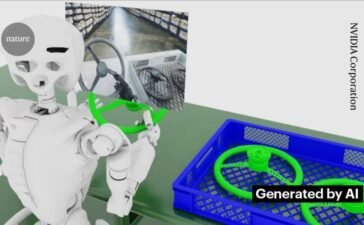
what are they and what can they do?
Nvidia’s Cosmos is one world model being trained on physics data about real-world environments.Credit: NVIDIA CorporationAn ongoing trend in artificial...


