




Trump will address the nation on Wednesday on the Iran war Wednesday—here’s what to expect

2Views
With U.S. crude nearly doubling in price since the beginning of the year, and with the Strait of Hormuz still more-or-less blocked, the cost of almost everything from cars to flights to even those reliant on plastics or semiconductors (to power phones or that new AI technology everyone’s raving about), April is shaping up to be a very cruel month, indeed.
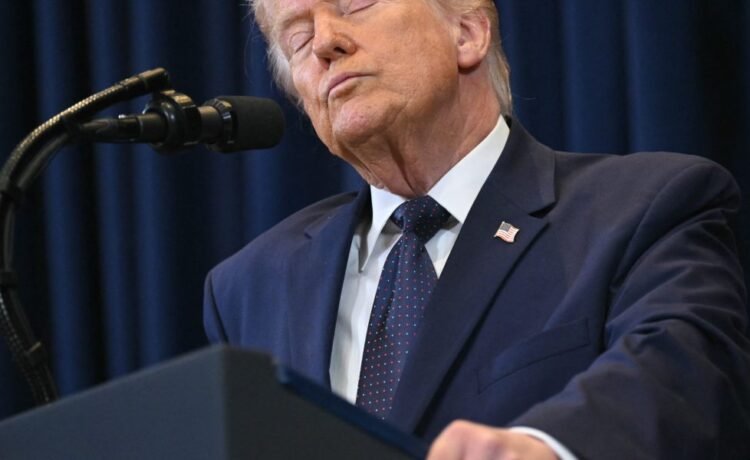
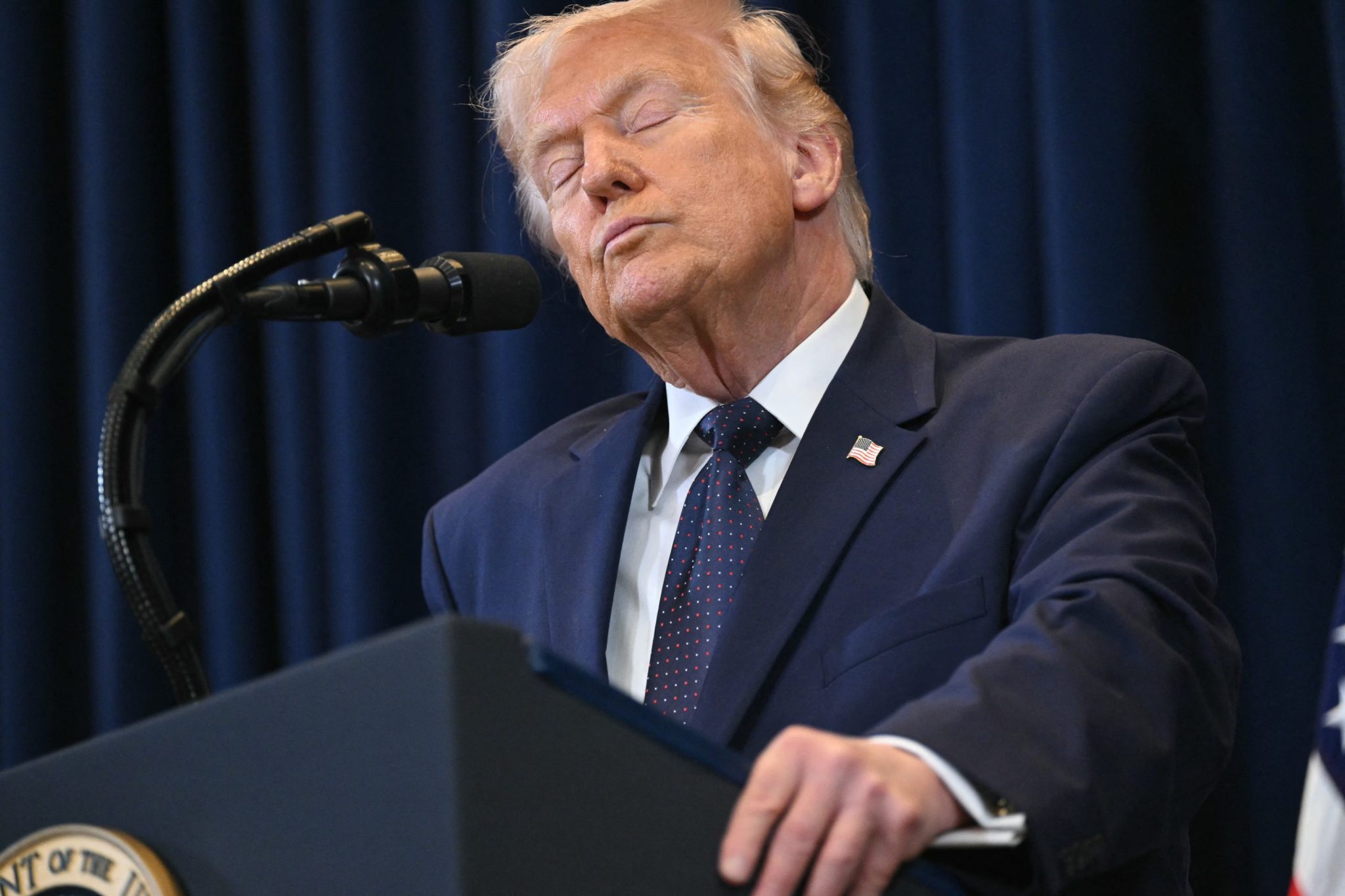
President Donald Trump will address the nation at 9 p.m. ET Wednesday to deliver what the White House has called “an important update on Iran”—his first primetime remarks since the U.S. and Israel launched strikes on Feb. 28. The address will air across all four major broadcast networks, forcing scheduled programming to move to the side, including the season finales of The Masked Singer and a special episode of Survivor.
The address comes as gas prices cross the $4 a gallon threshold on average in the U.S., and Trump’s approval rating has sunk below 40% in recent polling while he continues to advance a war that the majority of Americans say they oppose. Politically, for Trump, the pressure to explain the war—the who, what, why and when—has become unavoidable
What Trump might say
Based on Trump’s own comments and White House leaks, the broad strokes are already visible. Over the last day, Trump has repeatedly told reporters that he has a 2-3 week plan to end operations, consistent with his remarks to Reuters earlier Wednesday that the U.S. will be “out of Iran pretty quickly” and could return for “spot hits” if needed. The framing appears to be a victory lap: Trump has already claimed “full regime change,” though Iran does not, in fact, have a new government, and said U.S. action has ensured Iran will never obtain a nuclear weapon.
Gregory Brew, a senior analyst at Eurasia Group who covers Iran and oil, noted on X that the administration appears to be coalescing around a specific justification: that Iran was building a “shield” of missiles and drones behind which it planned to secretly rebuild its nuclear program, and that the U.S. had to act before it was too late.
“He may declare that the strait is wide open and there’s no problem,” Tom Kloza, a veteran oil analyst and advisor to Gulf Oil, told Fortune. “You just don’t know.”
The ceasefire picture is muddier than the public posturing suggests. Trump claimed on Truth Social that Iran’s president had requested one, but Tehran’s public response was quick and scathing: “No attention is given to the delusions and falsehoods of criminals,” a spokesperson for President Masoud Pezeshkian’s office wrote on X. Behind the scenes, however, a real diplomatic track appears to be in motion. Vice President JD Vance spoke with Pakistani intermediaries as recently as Tuesday, delivering what a source described as a “stern” message that Trump was “impatient” and that pressure on Iranian infrastructure would increase until a deal is reached, Bloomberg reported. Vance was tasked by Trump to privately communicate that the U.S. is open to a ceasefire as long as certain demands are met.
In a sign of counter-programming, Iranian state media reported Wednesday that Pezeshkian will release an “important” letter addressed directly to the American people, expected shortly.
Even the word “ceasefire” is slippery in this context, Kloza warned. “One man’s ceasefire is another’s cauldron of boiling war,” he said. “It’s not mathematical language. It’s very equivocal.”
Confusion over the Strait of Hormuz
It’s unclear what exactly Trump’s preconditions even are. On Tuesday, he told European allies to “go get your own oil,” and said securing the Strait of Hormuz wasn’t America’s problem anymore. Wall Street cheered that on. By Wednesday, Trump wrote on Truth Social that he wanted the Strait of Hormuz be “open, free, and clear” before ceasefire talks could begin.
The United Arab Emirates responded by asking the UN to authorize measures, including the use of force, to reopen the strait, a sign of increasing desperation among Gulf states dependent on passage through it. That may be the most consequential development for markets: the strait is the single variable the oil market cares about most, and Trump has effectively washed his hands (then dirtied them again) of it.
The speech arrives against a backdrop of continued escalation. An Iranian missile struck a fuel oil tanker in Qatari waters Wednesday morning, while Houthi rebels launched a third barrage of missiles toward Israel. More than 3,000 people have been killed across the Middle East, including 13 U.S. service members. And an American journalist was kidnapped in Iraq on Tuesday by suspected Iranian-backed militants.
The International Energy Agency has called the Hormuz disruption the largest supply disruption in history. IEA Executive Director Fatih Birol warned Wednesday that April will be significantly worse than March, because oil shipments already in transit when the war began have now been delivered.
“In April, there is nothing,” Birol said.
Marko Papic of BCA Research estimates the world has lost 4.5 to 5 million barrels per day, about 5% of global supply, but warns that number will double by mid-April as strategic reserves run dry. The cumulative loss of crude, refined products, and petrochemicals is approaching half a billion barrels, Kloza estimated.
“I have a hunch that whatever he says, it’s not going to have the desired impact of really reversing all of these high prices,” Kloza said. “I think we’ve started something now that can’t be stopped in its tracks.”
The strategic petroleum reserve release—400 million barrels across IEA member countries, the largest on record—has helped, but Kloza put the math in perspective: “When you think about losing 10 to 20 million barrels a day and releasing 1.3 million, it’s pretty obvious that it’s a pop gun against howitzers.”

Amazon buys Fauna Robotics, maker of the Sprout humanoid robot that can dance and pick up toys
Amazon has acquired Fauna Robotics, just under two months after the startup introduced a humanoid robot called Sprout designed to be...

New Disney CEO’s first week on the job was upset by 3 big developments
Josh D’Amaro stepped into that corner CEO office at Walt Disney with a clear goal, pledging the company would focus...
Iran issues its largest-ever currency denomination as spiraling inflation ravages financial sector
Iran’s economy was already crashing before the U.S. and Israel launched a war against the Islamic republic three weeks ago,...

ABC cancels new ‘Bachelorette’ season after video emerges of star committing domestic abuse
ABC has scrubbed the upcoming season of “The Bachelorette,” starring Taylor Frankie Paul, three days before its planned premiere, citing a newly...


