




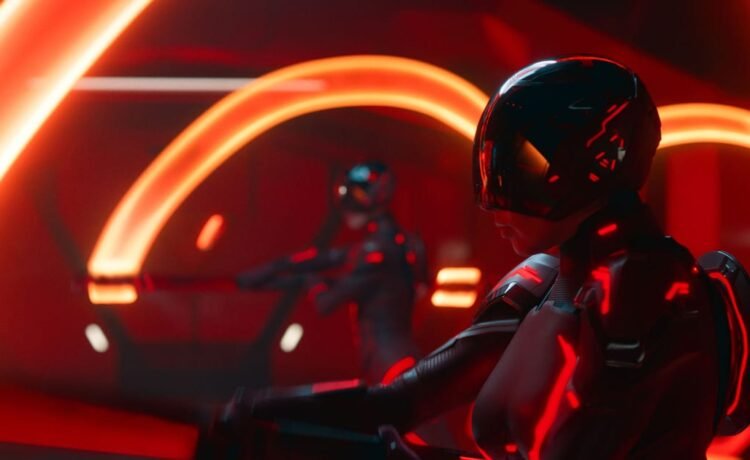

“The ’80s,” gasps Jared Leto (the eponymous Ares) with something approaching the human emotion of reverence. “Classic,” he says during a sequence paying extended homage to the visuals of the original Tron movie. “I love the 80s,” he fawns as he talks about how great Depeche Mode are, in a segment intended to illustrate the difference between being told something is good, and feeling as if it is.
In Tron: Ares, the best is always in the rear view mirror – whether it’s the film’s take on the famous Akira slide (reset the clock!) or its garbled recollections of whatever constitutes Tron lore. For all of its faults, 2010’s Tron: Legacy at least showed interest in building new visual architecture, or playing around in new technological spaces (perhaps irresponsibly, perhaps to a fault).
Get more Little White Lies
Rather than thinking about how Tron could adapt to now, the film grasps at the apparent glories of the past. Curiously, it also eschews Legacy’s cast as it hits a soft reset on the franchise. As such, Ares feels more confused, more hollow than its predecessor, and with none of the winsome kitsch to make up for it.
Somehow Ares also outdoes the film literally titled “Legacy” in its navel-gazing – its callbacks to the first instalment feel especially desperate. The film cites Greek mythology, with Ares and his subordinate Athena (Jodie Turner-Smith), but its ploys for a sequel are more reminiscent of the wax wings of Icarus. It’s a film with less substance than its predecessor, attempting to reach for more, and likely doomed never to make it that far.
Leto is simply not a capable enough or, for that matter, an even remotely likeable performer, certainly not to the level needed to connect the thematic dots. People (fairly) criticised the uncanny lifelessness of the digital replica of Jeff Bridges in Tron: Legacy, but Leto feels like an even less convincing impression of a human.
It’s a crucial failing, as the film hinges on our belief that there’s a burgeoning humanity in the character Ares that deserves to be preserved. More convincing in this regard is Turner-Smith who, as Athena, plays a program more confused and troubled by the human sensations beginning to creep into her code. There’s some actual substance here, or at least a clearer through-line than how Leto robotically flips between two contrasting tones of voice. Meanwhile as Eve Kim, replacing the previous film’s Sam Flynn as head of Encom, Greta Lee is given little to work with. Her supporting cast, who honestly could have been flown in from the M3GAN set with little difference in either case, have even less.


Hey Nostradamus: Conner O’Malley’s American Dream
O’Malley’s videos feature the wild plot twists and whiplash juxtapositions of a short-attention-span culture; watching them can be as abrasive as...

Rose of Nevada | Mother Mary | Vox Lux (2018)
On Truth & Movies this week, we discuss Mark Jenkin’s Rose Of Nevada and David Lowery’s Mother Mary. For Film...

Michael review – legacy management 101
Forget all the bad stuff you ever knew about Michael Jackson. Wipe it from your mind. If you happen to...

Departures review – the turbulent journey of…
Like boarding a flight for somewhere promising, only to be met with an emergency landing, Departures never quite reaches the emotional depth...


