




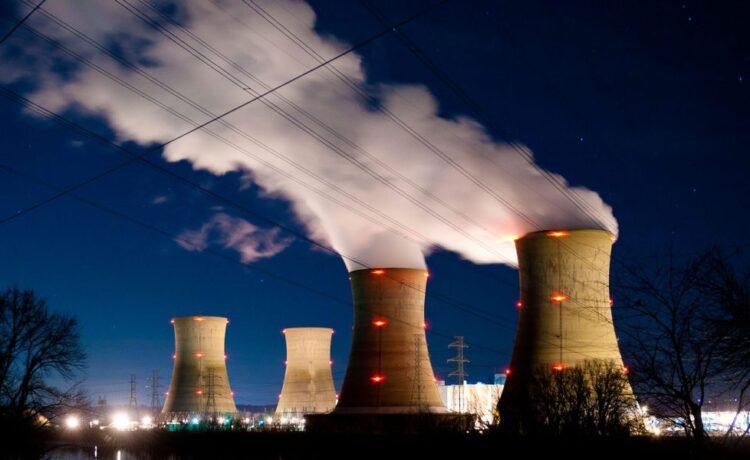

Three Mile Island, the site of the worst nuclear accident in U.S. history, is opening up once again.
Microsoft and Constellation Energy, which owns the plant, have struck a deal that will see the plant’s undamaged reactor resume operations to power Microsoft’s AI data centers. Microsoft has signed a 20-year power-purchase agreement with Constellation, which will spend $1.6 billion to restart the reactor. It’s expected to be operational again by 2028.
Constellation shares were up 14% in early trading Friday morning.
“Before it was prematurely shuttered due to poor economics, this plant was among the safest and most reliable nuclear plants on the grid, and we look forward to bringing it back with a new name and a renewed mission to serve as an economic engine for Pennsylvania,” said Joe Dominguez, president and CEO of Constellation in a statement.
The facility’s Unit 1 reactor will be restarted. That facility sits next to the Unit 2 reactor that had the partial meltdown in 1979. Unit 1 “permanently shut down” on Sept. 20, 2019 after starting operations in 1974. Constellation purchased the unit in 2000, and it produced enough electricity in the following years to power 800,000 homes for almost two years and “offset more than 95 million metric tons of carbon, the equivalent of nearly 20 million cars off the road,” the company says.
Constellation was not the owner of the Unit 2 reactor.
The owners of approximately one-third of the country’s nuclear power plants are reportedly taking with companies to help power data centers. And a big source of that demand is the growing use of artificial intelligence. That’s raising concerns about the impact on the larger power grid, which has struggled some as the country experiences extreme weather conditions. (The grid is also considered a high-risk target of hackers.)
Experts have warned data centers could become a big strain on the U.S. power grid, with the nine-year projected growth forecast for North America essentially doubling from where it stood a year ago. Last year, the five-year forecast from Grid Strategies projected growth of 2.6%. That number has since nearly doubled to 4.7%—and planners expect peak demand to grow by 38 gigawatts. In real-world terms, that’s sufficient to power 12.7 million homes.
“The U.S. electric grid is not prepared for significant load growth,” Grid Strategies warned.


Down Arrow Button Icon
Especially in this economy, one place you don’t want to find yourself in is debt. Life is expensive enough without hemorrhaging money...

Doritos prices jumped 50% in four years and PepsiCo waited until it lost billions to do something
The skyrocketing price of Doritos, Lay’s, and Cheetos have pushed away cash-strapped consumers and have cost Frito-Lay billions. The company...

Trump will address the nation on Wednesday on the Iran war Wednesday—here’s what to expect
With U.S. crude nearly doubling in price since the beginning of the year, and with the Strait of Hormuz still...

Amazon buys Fauna Robotics, maker of the Sprout humanoid robot that can dance and pick up toys
Amazon has acquired Fauna Robotics, just under two months after the startup introduced a humanoid robot called Sprout designed to be...


