





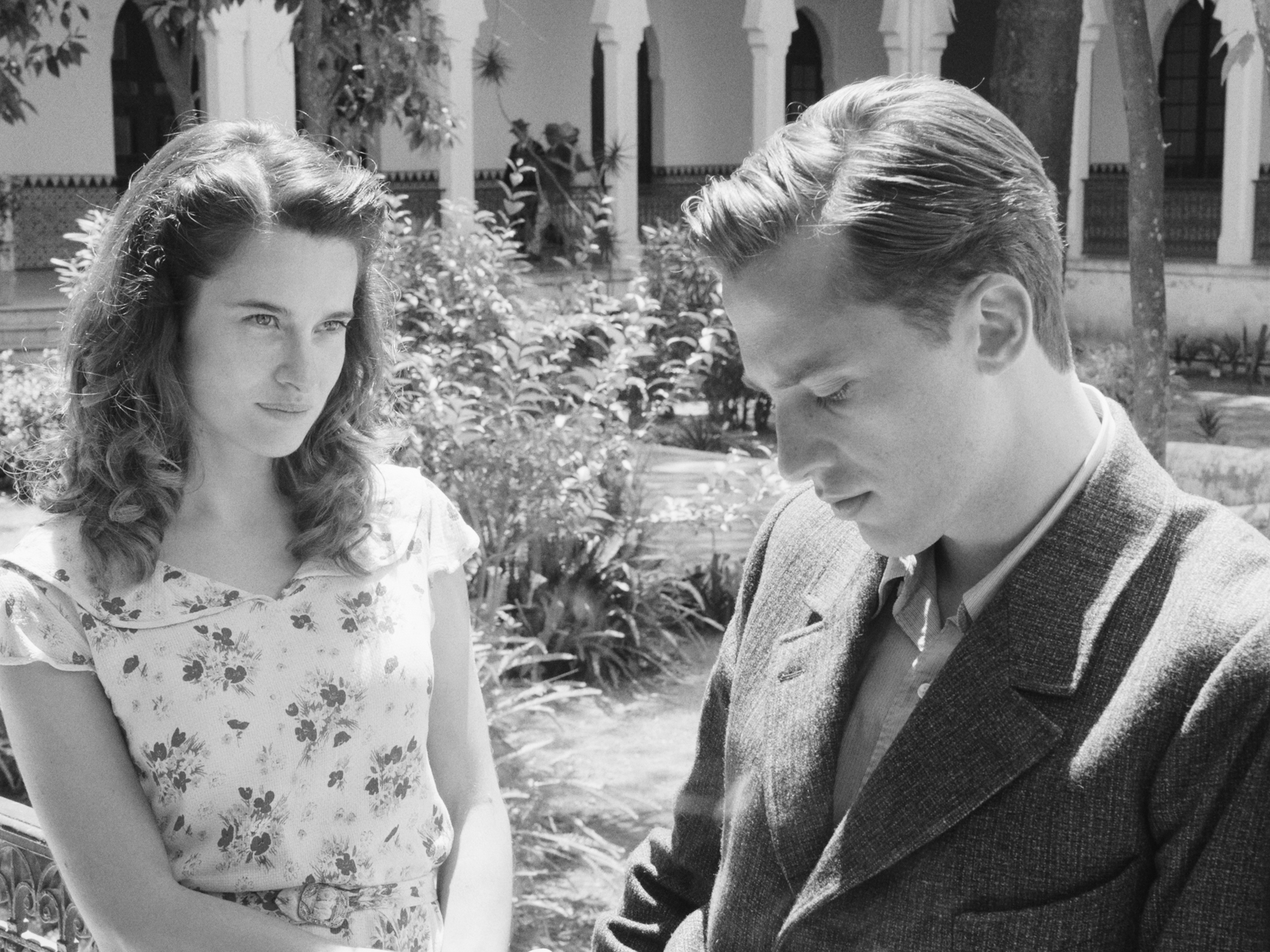
A confession: I am really not a fan of the French filmmaker Franoçois Ozon. He seems like a lovely chap. Literate, passionate, with a major crush on the films of Rainer Werner Fassbinder. But the thought of having to sit through another mediocre annual missive of “quality” coffee-table arthouse fare has become something of a dismal chore. Yet you’ve gotta stay in the game, as just like the proverbial stopped clock, Ozon does occasionally know what time it is. For this new film he’s taken on the loopy task of adapting Albert Camus’ 1924, Algeria-set novella, ‘The Stranger’, and filming it like a laconic, monochrome perfume ad.
It’s the story of an empty human husk named Meursault (played here by Benjamin Voisin), who shirks the polite necessity for human connection in the face of overwhelming existential dread. Yet Meursault is no archetypal maniac, and his modus operandi is one of quiet, unsmiling contemplation. When he is charged for the murder of a local (with a tenuous self-defence angle), this emotional disconnection comes back to haunt him at his trial, with the reminder that he did not cry at his mother’s funeral shocking the jury. His fate seems to be sealed by a judicial and governmental system that acts with the same sense of indifference as he does.
Get more Little White Lies
All this describes Camus’ story, which Ozon loyally transposes to his screenplay. Yet something is lost in the journey from page to screen, the literary experience of having to fill in the many blanks of this stark tale being replaced with leading visuals and much unhelpful commentary loaded into every formal decision. Voisin is superb as a person whose oblique motivations make him defy rational description; his unselfconscious performance is stripped back to the bone and he makes Meursault seem disarmingly normal. He is no intellectual embroiled in a deathly game, he is, as Camus perhaps intended, an encapsulation of the confused common man leaning on primal instinct to make sense of the world.
Where Ozon presents as an ironist in much of his work, skewering genres and retro styles, there’s a refreshing seriousness to this mad endeavour that demands attention, even when some of the choices he makes don’t feel entirely right. By design, Meursault is not a particularly interesting character, and the first half of the film pays prestige homage to the book without ever springing with the vitality you get in the pages from being inside the protagonist’s head. Perhaps a noble folly, then, but one that at least suggests Ozon’s ambitions as a filmmaker are worthwhile. And hats off to the perfect choice of song to play over the closing credits.


Hey Nostradamus: Conner O’Malley’s American Dream
O’Malley’s videos feature the wild plot twists and whiplash juxtapositions of a short-attention-span culture; watching them can be as abrasive as...

Rose of Nevada | Mother Mary | Vox Lux (2018)
On Truth & Movies this week, we discuss Mark Jenkin’s Rose Of Nevada and David Lowery’s Mother Mary. For Film...

Michael review – legacy management 101
Forget all the bad stuff you ever knew about Michael Jackson. Wipe it from your mind. If you happen to...

Departures review – the turbulent journey of…
Like boarding a flight for somewhere promising, only to be met with an emergency landing, Departures never quite reaches the emotional depth...


