




While there’s a growing body of academic research which suggests that social media can have negative impacts on mental health, there are also positives, including enhanced connection, support, finding interest communities, and more.
But which is more impactful, the negatives associated with social comparison and exposure, or the positives of connectivity.
According to this report commissioned by LG Electronics, the balance is actually fairly split.
As per the data (based on responses from 2,000 Gen Z Americans):
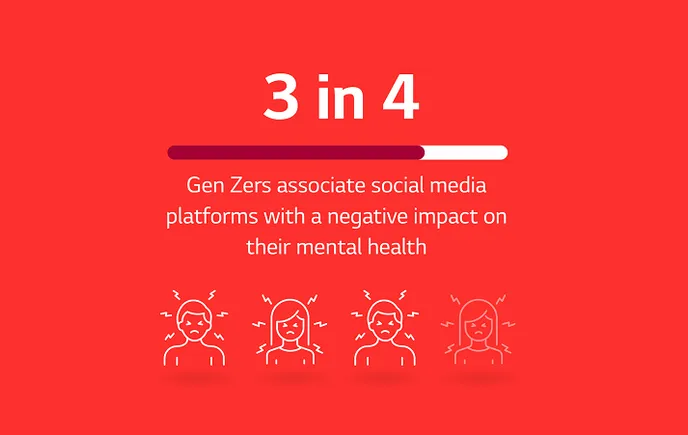
- 75% of respondents associated social media usage with negative impacts on their mental health
- 54% felt that they had little control over the content displayed in their social feeds
- 80% of respondents associated social media with a positive impact on their mood.
So there’s the good and the bad, though it’s interesting to also note that so many people don’t feel like they understand the controls at their disposal to manage their feeds.
On balance, then, it does seem that many people get enjoyment from the short-term dopamine of social media, but the longer term impacts may still be overly negative.
That’s why regulators have had so much difficulty in setting usage rules or parameters, because there are no definitive answers on the true impacts.
You can check out the full study results in the graphic below.



Advanced AI Deep Research: Uncover Insights Your Competitors Are Missing
Are you spending days trying to keep up with everything happening in your industry? Wondering how to make faster, better-informed...
Facebook’s 2026 Rules for Reach & Relevance
Are you spending hours creating content on Facebook only to watch your reach plateau or shrink? Wondering how the latest...

X boosts incentives for original content creators
Listen to the article 4 min This audio is auto-generated. Please let us know if you have feedback. X is...

Ads and AI: Leveraging AI Creative in 2026
Are your competitors producing more creative than you can match because they've figured out how to use AI to do...


