





A great piece in the NYTimes on the history and future of factory produced buildings:
But the most remarkable difference between the United States and Sweden is regulatory. Building codes in the U.S. try to make buildings safe by prescribing exactly what materials must be used and how (a prescriptive code). In Sweden, the government does this by setting goals and letting builders come up with a way to achieve them (a performance code).
So, for instance, U.S. building codes dictate the thickness of drywall that must be used for fire resistance, how many layers are needed and how many nails are required to attach it. In Sweden, the code requires that a wall must resist burning for two hours, say, and lets engineers and manufacturers figure out how to accomplish that. The regulator’s job is to check the engineer’s work.
The result of both is fire resistance and structural safety, but in the United States, each residential building needs to be granted a permit. During construction, work often halts for inspectors to make periodic visual inspections. That contributes to a stop-and-go pace that frustrates pretty much everybody except lenders, who get interest on financing. Sweden’s codes require more work on the front end when builders have to demonstrate that their methods are up to snuff, but factory processes that comply with the performance code can be certified. This encourages innovative solutions and results in less waste.
As an example of how a performance code leads to innovation:
..Before Sweden adopted its performance-based code in 1995, wood buildings had been limited to two stories; almost overnight, wooden buildings could be as tall as engineers could prove safe.

Addendum: See the comments for useful argument that the US code is more performance based than the NYTimes article suggests. What would be very useful is to hear from someone with experience in both systems.
The post Prescriptive versus Performance Codes appeared first on Marginal REVOLUTION.


The Public Choice Outreach Conference!
The annual Public Choice Outreach Conference is a crash course in public choice. The conference is designed for undergraduates and...
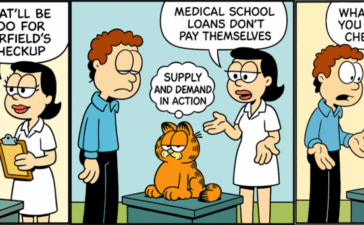
Marginal Garfield
Marginal Garfield generates an original Garfield cartoon every day based on posts from Marginal Revolution! Here is the first strip....
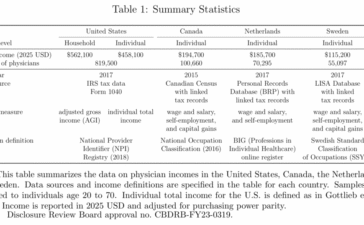
Physician Incomes and the Extreme Shortage of High IQ Workers
Physician incomes are extraordinarily high in the United States. A new NBER paper finds that U.S. physicians earn roughly two...

South African safari photo by Holly Cowen
The post South African safari photo by Holly Cowen appeared first on Marginal REVOLUTION. Source link...


