





This analysis is evidence that widespread grade inflation, which has also been documented by the ACT, the National Center for Education Statistics and independent scholars, has persisted through 2023. In this transcript analysis, grade inflation occurred more frequently for Black and Hispanic students than Asian and white students. It was also more common for low-income students.
Large discrepancies were documented. Almost 4,800 of the inflated grades were two letters higher than the student’s test score would indicate. An AP exam might have indicated a D-level of mastery, but the student earned a B in the class. On the flip side, more than 1,000 students received grades that were two letter grades lower than their assessment score.
The report rejected the possibility that test anxiety is the main culprit for such widespread and large discrepancies, and laid out a list of other reasons for why grades don’t reflect a student’s skills and content mastery. Some teachers feel pressure from parents and school administrators to give high grades. Many teachers factor in participation, behavior and handing in homework assignments – things that have little to do with what a student has learned or knows. Meanwhile, grades can be depressed when teachers make deductions for late work or when students fail to turn in assignments. Group projects that are weighed heavily in the final grade can swing a student’s final transcript grade up or down. In the report, one superintendent described how teachers in his district awarded students points toward their grade based on whether their parents attended Back to School Night.
Reasonable people can debate how much grades should be used to promote good behavior. The Equitable Grading Project argues that schools should use other rewards and consequences, and keep grades tied to academic achievement.
However, solutions aren’t quick or easy. The organization worked with over 260 teachers during the 2022-23 school year to implement a version of “mastery-based grading,” which excludes homework, class assignments and student behavior from the final grade, but uses a range of assessments – not only tests and papers – to ascertain a student’s proficiency. Teachers were encouraged to allow students multiple retakes. After five workshops and four coaching sessions, teachers’ grading accuracy improved by only 3 percentage points, from 37.6% of their grades accurately reflecting student proficiency to 40.6%.
Part of the challenge may be changing the minds of teachers, who tend to think that their own grades are fine but the problem lies with their colleagues. In a survey of almost 1,200 teachers that accompanied this quantitative study, more than 4 out of 5 teachers agreed or somewhat agreed that their grades accurately reflect student learning and academic readiness. But nearly half of those same teachers doubted the accuracy of grades assigned by other teachers in their own school and department.
Grading practices are an area where schools and teachers could really use some research on what works. I’ll be keeping my eye out for solutions with evidence behind them.
This story about the Equitable Grading Project was written by Jill Barshay and produced by The Hechinger Report, a nonprofit, independent news organization focused on inequality and innovation in education. Sign up for Proof Points and other Hechinger newsletters.

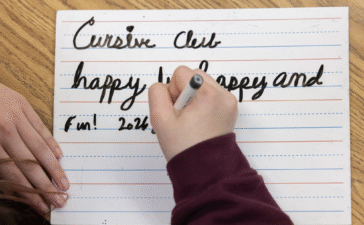
Cursive Is Back. But Should Students Be Learning the Skill?
“I prefer writing in cursive,” Halle said. The pair are proud members of the Holmes Middle School cursive club in...

The AI ‘Hivemind’: Why So Many Student Essays Sound Alike
Bruce Maxwell, professor of computer science at Northeastern University, was grading exams for his online master’s course in computer vision,...

Retirees Are Helping Child Care Centers While Connecting with Community
The shortage of child care teachers is a well-known problem, but a lack of qualified substitute teachers doesn’t always get...

Southern States Boost Early Reading, But Gains Stall in Middle School
Alabama, Louisiana and Tennessee started reforms later and may need more time. But McGrath’s question remains. Researchers and literacy advocates...


