




Conny Waters – AncientPages.com – Recent archaeological discoveries on the island of Janitzio in Lake Patzcuaro, central Mexico, have shed new light on the region’s pre-Hispanic past. The island, known for its steep slopes and significant role in Day of the Dead celebrations, has revealed unexpected historical treasures due to climate change-induced water level drops.
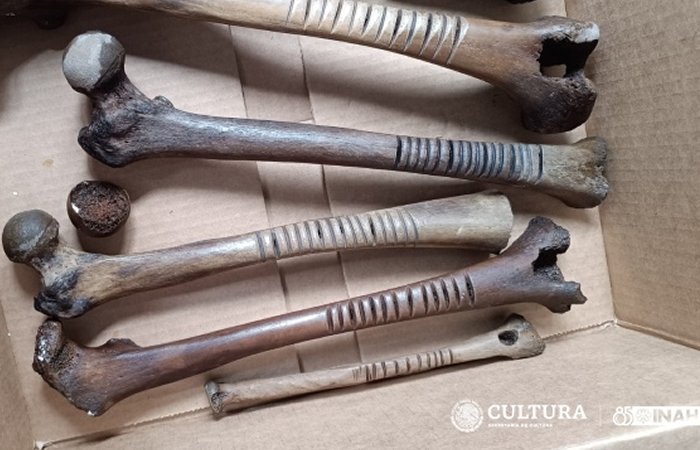
Engraved human bones were found by INAH researchers. Photo: CINAH Michoacán.
Archaeologists from the National Institute of Anthropology and History (INAH) uncovered a significant artifact in May this year: a tepari, a traditional canoe-like vessel utilized by indigenous populations before Spanish colonization in the early 16th century. The discovered tepari measures 14.8 meters (48.5 feet) in length. This finding was made possible due to receding water levels, which exposed cracked, dried-up sediments along the shoreline.
Experts from INAH have determined that the boat sank while carrying a load of firewood. This detail has led researchers to hypothesize that Purépecha boatmen had recently completed a journey to nearby Erongaricuaro and returned to their island with their cargo when the vessel sank.
More recently, during dredging operations on the island, INAH researchers and local authorities have identified an area containing many pre-Hispanic artifacts. These vestiges offer valuable insights into the island’s ancient history and the cultures that inhabited the region prior to European contact.
While the retreating waters of Lake Patzcuaro are a concerning effect of climate change, they have inadvertently provided archaeologists with access to previously submerged historical sites. These discoveries contribute to a more comprehensive understanding of the area’s rich cultural heritage and pre-colonial maritime practices.
Archaeologists have also discovered numerous human bones, primarily femurs, on the exposed lakebed. These remarkably well-preserved bones feature intricate carvings and grooves, suggesting ritualistic or cultural significance.
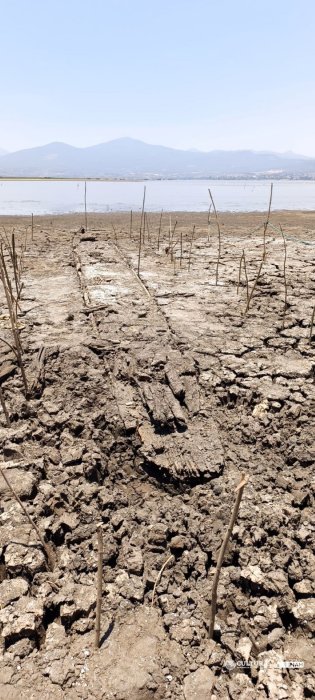
Ancient human remains were found on the shores of the island of Janitzio. Photo: CINAH Michoacán.
In addition to the human remains, the site has revealed various ceramic and stone artifacts. According to the National Institute of Anthropology and History (INAH), these objects, including ceramic urns, were likely deposited in the lake as offerings during pre-Hispanic times.
At least one other canoe has also been found. The contrast between the utilitarian nature of the boats and the ritualistic significance of the bones and pottery provides a nuanced view of the ancient society’s practices.
The local authorities plan to establish a museum in Janitzio to showcase these discoveries and promote cultural preservation. INAH encourages public participation in reporting new findings to aid in this effort.
See also: More Archaeology News
Environmental concerns have also arisen due to the lake’s decreasing water levels. An isthmus is forming between Janitzio and the mainland community of Jarácuaro, potentially threatening Janitzio’s island status. The situation is described as “critical” by Michoacán’s environment minister, with the channel separating the island from the mainland measuring less than 20 inches deep in some areas.
This archaeological project uncovers historical artifacts and highlights the region’s ongoing environmental challenges, emphasizing the interconnectedness of cultural preservation and environmental conservation efforts.
Written by Conny Waters – AncientPages.com Staff Writer


Radar Discovers Huge Oval-Shaped Anomaly Beneath Ancient Egyptian City – An Archaeological Mystery In Lower Egypt
Jan Bartek - AncientPages.com - Researchers using an advanced satellite radar system have identified a large, oval-shaped anomaly beneath one...

Unexplained Rock Phenomena And Energy Source In An Andean Town Reported By Explorers, Investigators, And Multiple Witnesses
Ellen Lloyd - AncientPages.com - In a remote, high-altitude Andean town in Peru, difficult to reach, reporters and investigators encountered...

Bergtagen – Taken By The Mountain – Troll Abductions That Defy Space And Time
A. Sutherland - AncientPages.com - In the old days, people were genuinely terrified of being dragged into the mountains and held...

Pharaoh Menkaure – Egyptian Ruler Who Tried To Outsmart Fate
A. Sutherland - AncientPages.com - During the reign of Khufu and Khafre, Egypt suffered severe disasters. Temples were closed, and...


