




More Students Are Going to College. Affordability and Workforce Training Are Factors


26Views
“Confidence in college is coming back, but it is conditional,” says Courtney Brown, who studies public opinion on colleges for the Lumina Foundation, an Indianapolis-based nonprofit aimed at improving higher education.
“The public’s been telling us that cost, flexibility and career relevance shape their view of college’s worth,” Brown says. “So people aren’t turning away from education — they’re just getting more precise about what kind of education they want.”
That could reflect uncertainty in the economy and news about hiring slowdowns, says Jeff Strohl, director of the Georgetown University Center on Education and the Workforce. He says when job prospects feel shaky and the economy is struggling, people return to college, especially community college.
“If we think about what’s going on in the U.S. economy as of late, especially a growing economic uncertainty, this kind of follows that pattern,” he says. “It’s easier to test the waters at a local community college than it is necessarily to go through the steps of enrolling in a four-year program, especially if a student doesn’t really know what they want to do.”
A big drop in international students at the graduate level
While the number of international students enrolling in undergraduate programs grew this academic year by 3.2%, it was overshadowed by a significant drop at the graduate level, by about 10,000 students.
That graduate-level drop — mostly in master’s programs — followed several years of strong growth in which the number of international graduate students had risen by about 50%. The downturn reflects federal policies that limited or disrupted the student visa process and the billions of dollars in canceled federal dollars flowing to research universities, disrupting the pipeline.
Another key finding from the latest enrollment data was a big decline in students studying computer and information sciences. The drop in both graduate and undergraduate programs came after years of steady expansion.
In addition to a consequence of fewer international students, Holsapple, at the Clearinghouse, explains that the shift away from CS majors is also influenced by the rise of artificial intelligence.
“Students are seeing the same trends that we all are seeing,” he says. “They see the same news reports of layoffs in the tech field. They see the rise of AI like we do.”
But he’s encouraged by these trends. “Students are making different choices, which I think is a real positive for the field and particularly for students because they have those options.”
Key Oversight Helping Keep Student Loan Records Accurate Has stopped, Watchdog Says
“Instead of providing relief to 43 million Americans who are drowning in student debt,” Sanders said in a statement to...
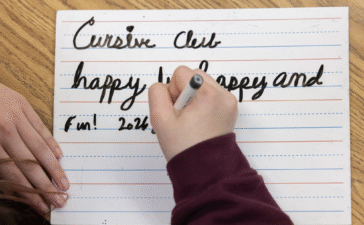
Cursive Is Back. But Should Students Be Learning the Skill?
“I prefer writing in cursive,” Halle said. The pair are proud members of the Holmes Middle School cursive club in...

The AI ‘Hivemind’: Why So Many Student Essays Sound Alike
Bruce Maxwell, professor of computer science at Northeastern University, was grading exams for his online master’s course in computer vision,...

Retirees Are Helping Child Care Centers While Connecting with Community
The shortage of child care teachers is a well-known problem, but a lack of qualified substitute teachers doesn’t always get...


