




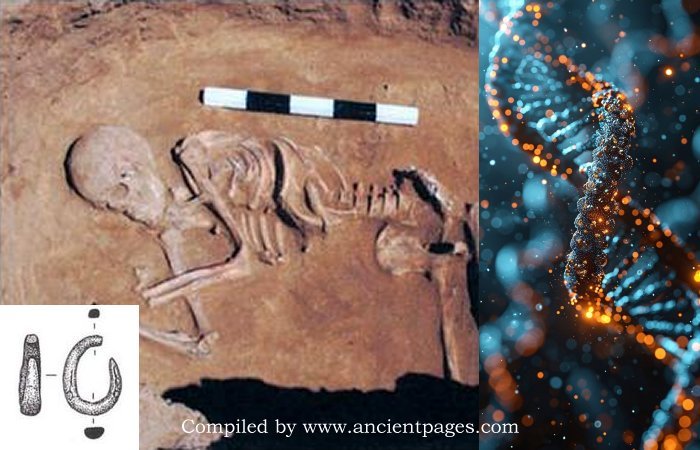
Jan Bartek – AncientPages.com – The origins of the Indo-European language family, which encompasses over 400 languages, including major groups like Germanic, Romance, Slavic, Indo-Iranian, and Celtic, spoken by nearly half of the global population today, have long intrigued historians and linguists.
These languages trace back to the Proto-Indo-European (PIE) language. Since the 19th century, researchers have been exploring its beginnings and dissemination due to existing knowledge gaps.

Credit: Pixabay – TyliJura – Public Domain
A recent study led by Ron Pinhasi and his team, Tom Higham and Olivia Cheronet from the University of Vienna’s Department of Evolutionary Anthropology, analyzed ancient DNA from 435 individuals across Eurasia dating between 6400–2000 B.C. Previous genetic research indicated that around 3100 B.C., the Yamnaya culture from the Pontic-Caspian steppes north of the Black and Caspian Seas expanded into Europe and Central Asia.
This expansion introduced “steppe ancestry” into human populations across Eurasia between 3100 and 1500 B.C. These migrations significantly impacted European genomes more than any other demographic event in the past 5,000 years and are considered a likely pathway for spreading Indo-European languages.
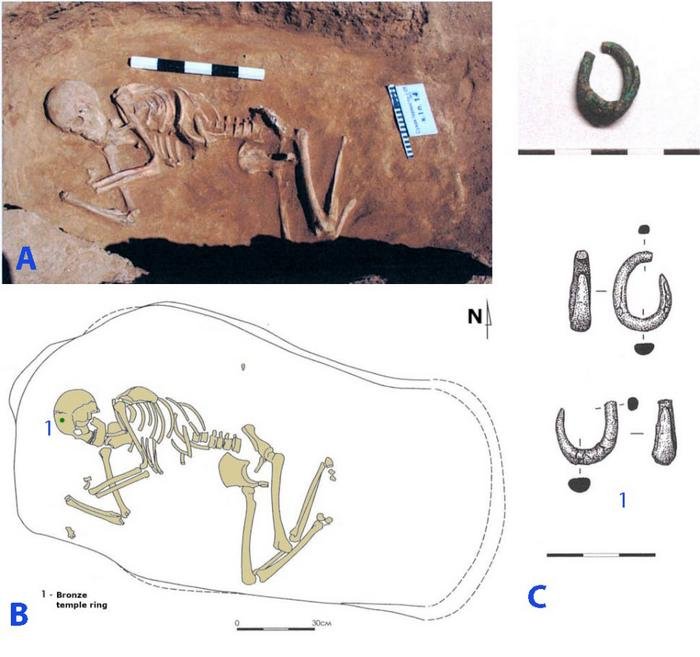
Photo of Remontnoye (3766-3637 calBCE), with a spiral temple ring. Credit: Natalia Shishlina (co-author of “The Genetic Origin of the Indo-Europeans”) – CC BY
The Anatolian branch, including Hittite, was the only Indo-European language group previously thought to lack steppe ancestry. This branch is considered one of the oldest to diverge from the Indo-European family, maintaining linguistic features lost in other branches. Earlier research did not identify steppe ancestry among the Hittites because it overlooked a crucial ancestral group.
A recent study suggests that Anatolian languages descended from a language spoken by an Eneolithic population between 4,500 and 3,500 B.C. in the steppes between the North Caucasus Mountains and the lower Volga. By incorporating genetic data from this newly identified Caucasus-Lower Volga (CLV) population as a source, researchers found CLV ancestry in at least five individuals in Anatolia dating back to or during the Hittite era.
The new study shows the Yamnaya population to have derived about 80% of its ancestry from the CLV group, which also provided at least one-tenth of the ancestry of Bronze Age central Anatolians, speakers of Hittite.
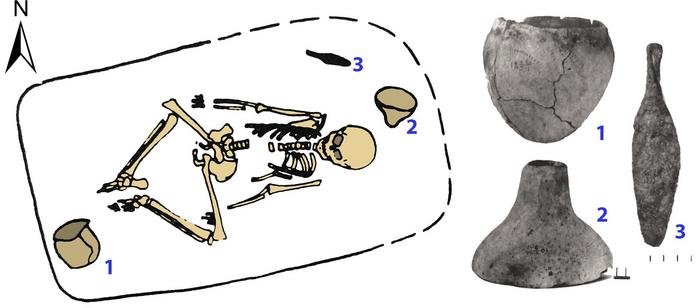
Photo a Yamnaya grave at Tsatsa, North Caspian steppes. Credit: Natalia Shishlina – CC BY
“The CLV group therefore can be connected to all IE-speaking populations and is the best candidate for the population that spoke Indo-Anatolian, the ancestor of both Hittite and all later IE languages,” explains Ron Pinhasi.
The results further suggest that the integration of the proto-Indo-Anatolian language, shared by both Anatolian and Indo-European peoples, reached its zenith among the CLV communities between 4.400 B.C. and 4.000 B.C.
“The discovery of the CLV population as the missing link in the Indo-European story marks a turning point in the 200-years-old quest to reconstruct the origins of the Indo-Europeans and the routes by which these people spread across Europe and parts of Asia”, concludes Ron Pinhasi.
The study was published in Nature
Written by Jan Bartek – AncientPages.com Staff Writer


2,400-Year-Old Underwater Structures Discovered Beneath Dicle Dam Lake In Türkiye
Jan Bartek - AncientPages.com - Historical structures estimated to be around 2,400 years old have been photographed underwater in the...

What They Never Told Us About Lullabies When We Were Children (Or Adults)
Conny Waters - AncientPages.com - Lullabies are gentle bedtime songs lovingly used to help children relax and drift into a...
Bertrand du Guesclin: ‘Eagle Of Brittany’ Brave, French Commander And His Clash With Sir Thomas Of Canterbury
A. Sutherland - AncientPages.com - Bertrand du Guesclin distinguished himself in the Hundred Years ' War, winning many victories and...
Bees – Embodiment Of Human Soul, Divine Messengers Symbolizing Invisible Bridge Connecting Life And Death
A. Sutherland - AncientPages.com - Bees are among the most recognized insects, featured in ancient myths and folklore across many...


