




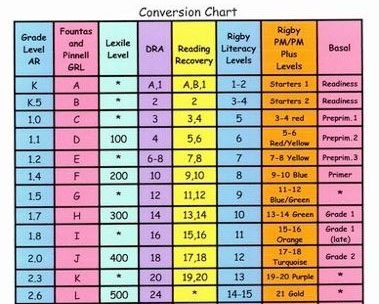
A Conversion Chart For Reading Level Measurement Tools
by TeachThought Staff
If you’ve used AR (Accelerated Reader) as a reading motivation tool to set goals and track progress, you’re undoubtedly aware of its ability to assess general reading levels as well.
The problem is, measuring reading level is really outside of its sweet spot as a literacy tool, with better resources available from DRA, DIBELS, Lexile, Reading Recovery, and Rigby, among others. There is also the issue of availability, with most schools only using one or two of these tools, primarily in early elementary school. But what happens if you need to convert a general level from one program to another?
1. Lexile Framework for Reading
The Lexile Framework is the most commonly used tool in U.S. schools. It measures both text complexity and a student’s reading ability on the same scale.
Pros: Integrated into many platforms (e.g., MAP Growth, Achieve3000), easy to match books to student level
Cons: Doesn’t account for background knowledge or interest
Best for: Grades 2+, especially when used with adaptive assessments
2. Fountas & Pinnell (F&P)
This A–Z guided reading system uses teacher observation and running records.
Pros: Rich qualitative insight, great for small groups
Cons: Time-consuming and somewhat subjective
Best for: K–5 guided reading programs
3. DRA (Developmental Reading Assessment)
Pearson Assessments
DRA provides a reading level based on fluency, accuracy, and comprehension.
Pros: Thorough snapshots of reading behaviors
Cons: Requires individual testing time
Best for: K–3 diagnostic use
4. STAR Reading
Renaissance Learning: A computer-adaptive test that quickly identifies a student’s reading level and ZPD (Zone of Proximal Development).
Pros: Fast, scalable, data-rich
Cons: Less diagnostic depth
Best for: Benchmarking and screening in grades 2–12
5. i-Ready Reading Diagnostic
i-Ready.com: This adaptive test provides personalized insight into student reading ability and links directly to instructional content.
Pros: Detailed reports, integrated curriculum
Cons: Proprietary system; requires full buy-in
Best for: Schools using i-Ready across subjects
6. Reading A–Z and Raz-Kids
These programs assign students leveled readers and allow for ongoing reading assessment.
Pros: Huge digital library, built-in quizzes
Cons: Leveling doesn’t always align with other systems
Best for: Daily reading practice and progress monitoring (Grades K–5)
7. Informal Reading Inventories (IRIs)
Varies by publisher—examples include Qualitative Reading Inventory and Basic Reading Inventory
Pros: Teacher-led, provides rich insight
Cons: Not standardized, takes time
Best for: Individual diagnosis and conference-based instruction
A Conversion Chart For Reading Level Measurement Tools
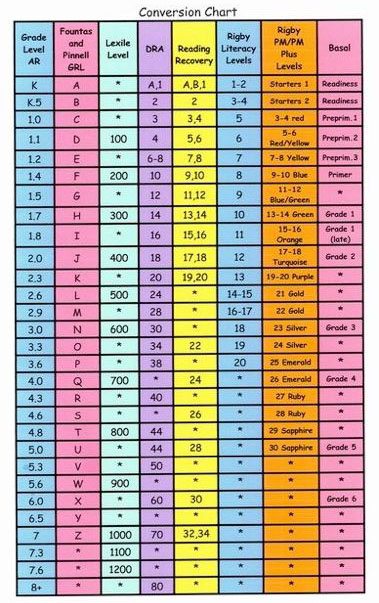
A Conversion Chart For Reading Level Measurement Tools


Cursive Is Back. But Should Students Be Learning the Skill?
“I prefer writing in cursive,” Halle said. The pair are proud members of the Holmes Middle School cursive club in...

The AI ‘Hivemind’: Why So Many Student Essays Sound Alike
Bruce Maxwell, professor of computer science at Northeastern University, was grading exams for his online master’s course in computer vision,...

Retirees Are Helping Child Care Centers While Connecting with Community
The shortage of child care teachers is a well-known problem, but a lack of qualified substitute teachers doesn’t always get...

Southern States Boost Early Reading, But Gains Stall in Middle School
Alabama, Louisiana and Tennessee started reforms later and may need more time. But McGrath’s question remains. Researchers and literacy advocates...


