




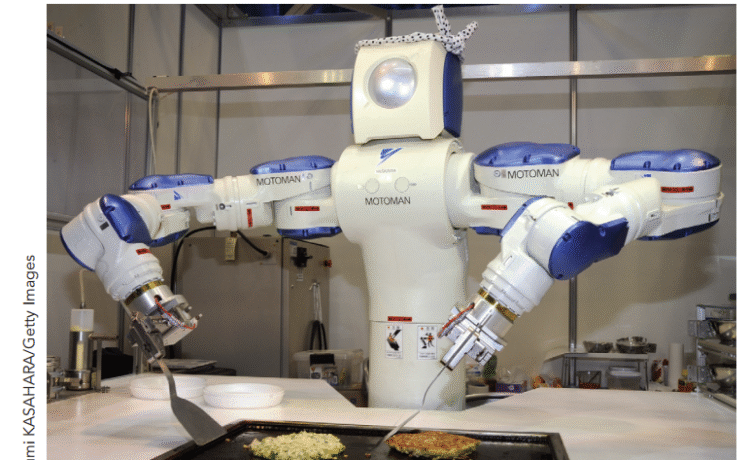
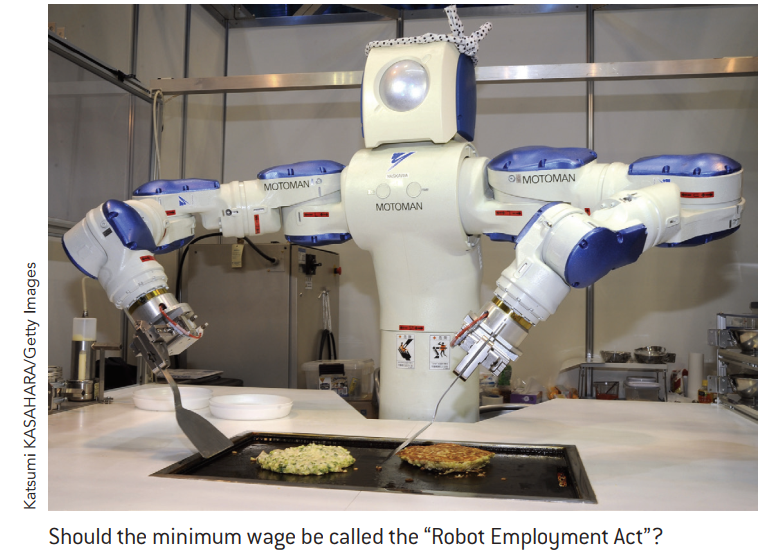
This paper studies how minimum wage policy affects firms’ adoption of automation technologies. Using both state-level measures of robot exposure and novel plant-level data on industrial robot imports linked to U.S. Census microdata from 1992-2021, we show that increases in minimum wages raise the likelihood of robot adoption in manufacturing. Our preferred identification exploits discontinuities at state borders, comparing otherwise similar firms exposed to different wage floors. Across specifications, a 10 percent increase in the minimum wage increases robot adoption by roughly 8 percent relative to the mean.
That is from Erik Brynjolfsson, et.al., including Andrew Wang. Via the excellent Kevin Lewis.
By the way, a photo from our textbook Modern Principles of Economics:
The post Minimum wage hikes and robots appeared first on Marginal REVOLUTION.

Revising Modern Principles
Here’s a revision I made to Modern Principles, my textbook with Tyler. Some things change dramatically, some things never change....

Greg Mankiw’s Blog: Thank you, AEA
About Me Name: Greg Mankiw Location: United States I am the Robert M. Beren Professor of Economics at Harvard University....

The Public Choice Outreach Conference!
The annual Public Choice Outreach Conference is a crash course in public choice. The conference is designed for undergraduates and...

Marginal Garfield
Marginal Garfield generates an original Garfield cartoon every day based on posts from Marginal Revolution! Here is the first strip....


