




Former OpenAI and DeepMind researchers raise whopping $300M seed to automate science

48Views
Periodic Labs came out of stealth on Tuesday with a war chest of $300 million as a seed round, backed by a tech industry’s who’s who: Andreessen Horowitz, DST, Nvidia, Accel, Elad Gil, Jeff Dean, Eric Schmidt, and Jeff Bezos.
Period Labs was founded by Ekin Dogus Cubuk and Liam Fedus. Cubuk led the materials and chemistry team at Google Brain and DeepMind, where one of his projects was, for instance, an AI tool called GNoME. That tool discovered over 2 million new crystals in 2023, materials that could one day be used to power new generations of technology, researchers say.
Fedus is a former VP of Research at OpenAI, and one of the researchers who helped create ChatGPT. He also led the team that created the first trillion-parameter neural network.
Its small team is likewise filled with researchers who have worked on other major AI and materials science projects, from building OpenAI’s agent Operator to working on Microsoft’s MatterGen, an LLM materials science discovery AI.
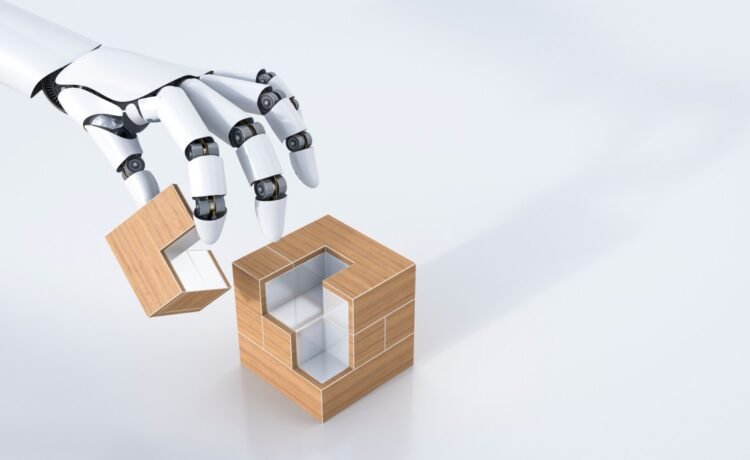
The goal of Periodic Labs is nothing less than to automate scientific discovery, creating AI scientists, the company says. This means building labs where robots conduct physical experiments, collect data, iterate, and try again, learning and improving as they go.
The lab’s first goal is to invent new superconductors that it hopes perform better and possibly require less energy than existing superconducting materials. But the well-funded startup also hopes to find other new materials.
Another goal is to collect all the physical world data that its AI scientists produce as they mix and heat and otherwise manipulate various powers and raw materials in their search for something new.
Techcrunch event
San Francisco
|
October 27-29, 2025
“Until now, scientific AI advances have come from models trained on the internet” and LLMs have “exhausted” the internet as a source that can be consumed, the company says in an introductory blog post. “At Periodic, we are building AI scientists and the autonomous laboratories for them to operate.”
The hope is that, not only will the labs invent next-generation materials, but they will produce invaluable fresh data that AI models can consume to continue their evolution.
While this might be one of the most impressive groups of researchers to assemble a startup for this purpose, it’s not the only one working on AI scientists. AI as a tool to automate chemistry discoveries has been a topic of academic research since at least 2023. It is the pursuit of tiny startups like Tetsuwan Scientific, as well as non profits like Future House and the University of Toronto’s Acceleration Consortium.

Image AI models now drive app growth, beating chatbot upgrades
Image model releases are driving growth for AI mobile apps, generating 6.5x more downloads than traditional model updates, according to...

Coatue has a plan to buy up land for data centers, possibly for Anthropic
Coatue, one of the biggest names in venture capital and hedge funds, has a new plan to generate bigger returns...

Amazon is already offering new OpenAI products on AWS
Almost as soon as OpenAI announced that its major investor and cloud partner, Microsoft, no longer has exclusive rights to...
Maine’s governor vetoes data center moratorium
Maine Governor Janet Mills has vetoed a bill that would have temporarily brought permits for new data centers to a...


