





In line with its traditions, Apple announced the new iPhone series with a new in-house chip, which is now called Apple A19 Pro. The chip powers the new iPhone 17 Pro, 17 Pro Max and the iPhone Air, which replaces the 16 Plus from a year before. Only the vanilla iPhone 17 runs on the non-Pro version of the new chipset.
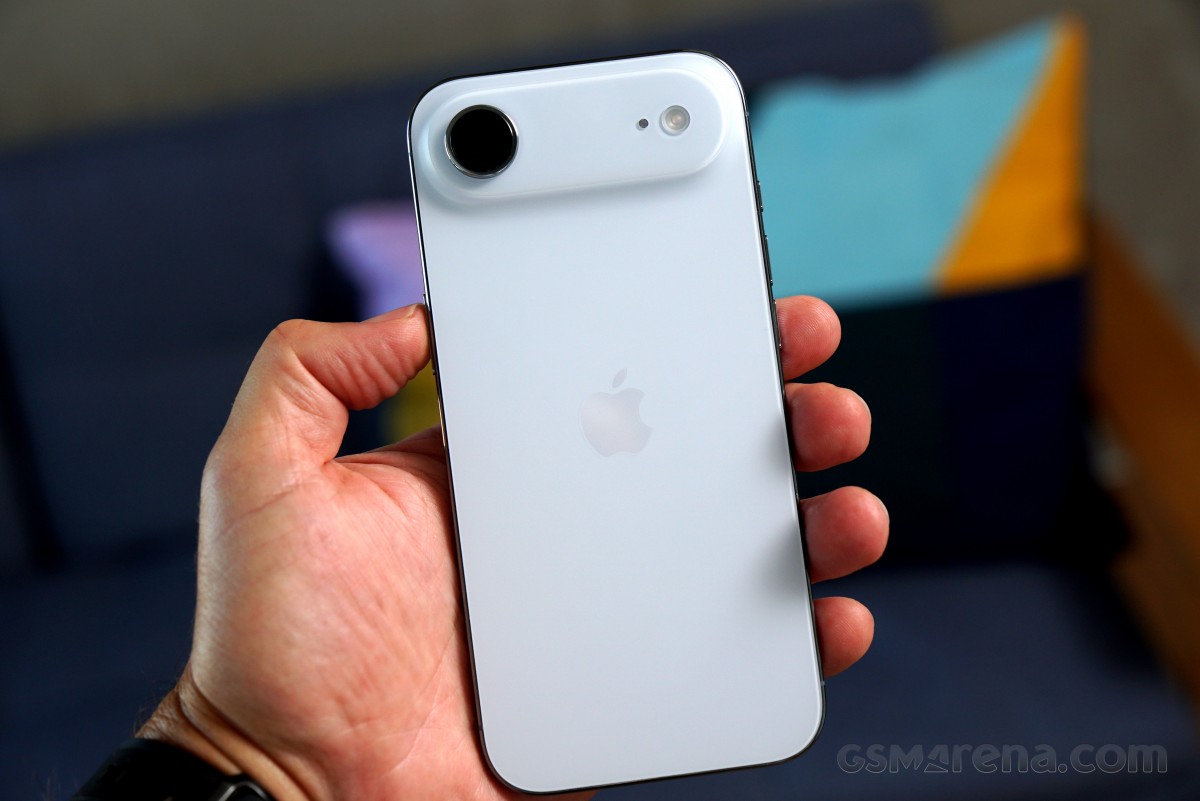
While we are working on the full iPhone 17 series reviews, we compiled some early benchmarks to give us an idea of the iPhone Air’s performance with the A19 Pro on board.
The A19 Pro inside the Air isn’t the full-fledged SoC that’s inside the 17 Pro and 17 Pro Max. It swaps out the 6-core GPU for a 5-core one, just like the one inside the standard iPhone 17 this year. So the slightly lower GPU performance is to be expected.
The CPU performance is impressive, with the A19 Pro outpacing the A18 Pro from last year by a significant margin, 15% in multi-core scenarios to be exact. The single-core improvements are smaller.
We’ve included competing solutions from Samsung running on Qualcomm’s top-tier Snapdragon 8 Elite, but we can only compare the CPU benchmark results from Geekbench 6. The AnTuTu and 3DMark scores are not directly comparable to phones on the Android platform.
In any case, it seems like the A19 Pro gives is behind the Snapdragon 8 Elite in multi-core performance, but outclasses Qualcomm’s latest and greatest in single-core performance by around 20%.
The Air’s A19 Pro GPU performs differently depending on the test. It managed to just edge the A18 Pro in Solar Bay, but was behind on the Wild Life GPU test. In fact in the latter it even came short of the A18 non-Pro inside the iPhone 16 Plus.
Apple iPhone 17 Pro
The A19 Pro also brings improvements in the AI number crunching and efficiency. The new SoC’s GPU has built-in Neural Accelerators in each GPU core, enabling more on-device AI computations. This limits the number of requests to Apple’s dedicated AI servers, making the whole process more efficient and faster.
Apple iPhone 17 Pro Max
It’s too early to tell how efficient the new SoC is, though, as we will have to run the complete set of tests. Moreover, we are eager to see how the iPhone Air handles sustained high workloads, since the thin body may pose an issue in this regard. Stay tuned for our review where we try to answer all those questions.
Apple iPhone 17


Samsung starts selling the Galaxy Z Flip7 FE in the US again
Samsung launched the Galaxy Z Flip7 FE last summer alongside the Galaxy Z Flip7, and the FE model was offered...

Apple AirPods Max 2 review
The AirPods Max are the only full-sized headphones Apple has ever made. It was certainly a surprise when the original...

Samsung Galaxy Buds4 Pro receive first firmware update
Samsung’s Galaxy Buds 4 Pro received a new software update, which brings minor stability improvements. Buds 4 Pro received the...

Samsung Galaxy Buds4 Pro review
Introduction and unboxing Samsung owns Harman, which is the parent company of several high-profile audio brands, many of which make...


