




London, United Kingdom, May 21, 2025 (Newswire.com)
–
Feeding your dog or cat might be doing more damage to the planet than you think.
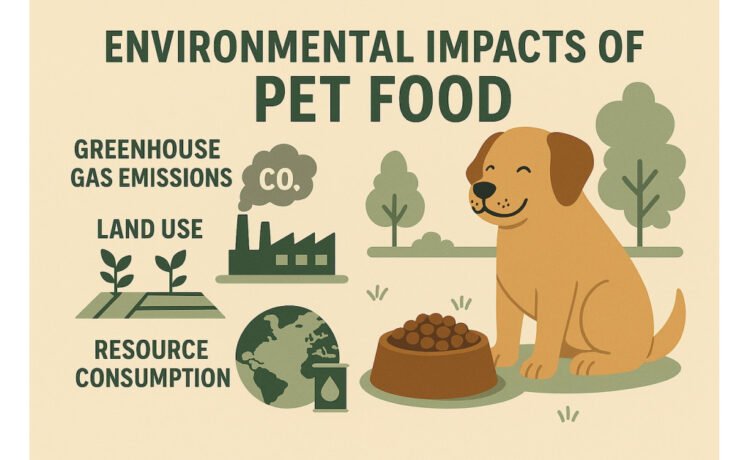
A new study has revealed that conventional meat-based pet food carries a largely unrecognized environmental cost – contributing significantly to land use, greenhouse gas (GHG) emissions, and climate breakdown. The review, just published, found that pet food production is closely tied to the livestock industry, which is responsible for at least one-fifth of annual global GHG emissions.
With the world’s pet population now approaching one billion animals, the impacts are no longer minor. In the United States alone, dog and cat diets account for 25-30% of the environmental toll of livestock farming. One analysis even found that a single medium-sized dog’s diet in Japan had a greater environmental footprint than the average Japanese person’s diet.
But experts say there’s a powerful – and practical – solution. Stated Billy Nicholles, the lead author, “Switching pets to nutritionally sound vegan diets significantly mitigates our dogs and cats’ environmental ‘paw prints.’ It’s a huge opportunity to reduce the environmental burden of our food system.”
The study examined 21 existing analyses of pet food sustainability and concluded that diet was the single largest factor driving environmental impacts. Protein choice was key: pet foods rich in animal ingredients were consistently linked to much larger environmental impacts.
By contrast, vegan pet diets – where formulated to be nutritionally sound – offered major reductions across all impact categories. If all pet dogs worldwide were fed a vegan diet, the resulting food energy savings could feed 450 million people, according to the study. Greenhouse gas savings would exceed the UK’s annual emissions.
“This offers huge potential,” said Professor Andrew Knight, co-author and veterinary expert. “Modern vegan pet foods are not only safe, but often healthier. And they’re vastly more sustainable.”
The report also pointed to emerging innovations like cultivated meat and precision-fermented proteins, which are beginning to enter the pet food market. These alternatives promise the taste and nutrition of meat without the massive environmental burden.
With consumer demand growing, the authors urge governments, brands, and the public to rethink what goes into pet food bowls. “Sustainable pet food isn’t just a niche trend,” said Nicholles. “It’s a climate solution hiding in plain sight.”
Contact Information
Billy Nicholles
Pet food researcher
billy@bryantresearch.co.uk
+44 7921461778
Andrew Knight
Veterinary Professor of Animal Welfare
andrew.knight@murdoch.edu.au
Source: Sustainable Pet Food Foundation


404-DAY-2026-Press-Release-img-2500x1500px – CDM Create Digital Music
404-DAY-2026-Press-Release-img-2500x1500px CDM Create Digital Music Source link The post 404-DAY-2026-Press-Release-img-2500x1500px – CDM Create Digital Music first appeared on floridadigitalnews. Source link...

TGI Axina Group Inc. Releases Groundbreaking White Paper: “The End of Greenwashing” and the Path to AAA-Rated Climate Finance
New research details how AI, Distributed Ledger Technology (DLT), and sovereign ERP systems are transforming the projected $340 billion carbon...
Airbus unveils Skywise subsidiary, integrating Navblue and Skywise digital services solutions – Airbus
Airbus unveils Skywise subsidiary, integrating Navblue and Skywise digital services solutions Airbus Source link The post Airbus unveils Skywise subsidiary, integrating...

New to The Street Announces Episode 741 Airing Tonight on Bloomberg Television at 6:30 PM EST Featuring Canton Networks, Acme Markets, Virtuix Holdings (VTIX), HPB, Jonas & Redman, Acurx Pharmaceuticals (ACXP), and FreeCast (CAST)
NEW YORK, April 4, 2026 (Newswire.com) - New to The Street, one of the longest-running U.S. and international business television...


