


Annual health checkups regularly include urine tests that serve several purposes, including checking for symptoms of kidney disease. The presence of albumin in the urine is one indicator as is glomerular filtration rate. In diabetic nephropathy, albuminuria first appears, leading to excessive filtration and eventually a decrease in GFR.
In the elderly, however, excessive filtration cannot be detected due to age-related GFR decline. To accurately assess GFR, Osaka Metropolitan University researchers have come up with a new calculation method.
The group led by Dr. Akihiro Tsuda, a lecturer at the Graduate School of Medicine, assessed 180 kidney transplant donor candidates to define a new formula for determining the threshold value for hyperfiltration based on age and GFR values.
Among other findings, the conventional method of correcting for body surface area in obese patients was determined to be inaccurate as excessive filtration cannot be detected. The researchers suggest calculating GFR without the correction but by taking into account the decline in the filtration rate due to aging.
“Since hyperfiltration is a precursor to diabetic nephropathy, we hope that using this new formula will more accurately diagnose the condition, leading to early detection and treatment,” stated Dr. Tsuda.
The findings were published in Hypertension Research.

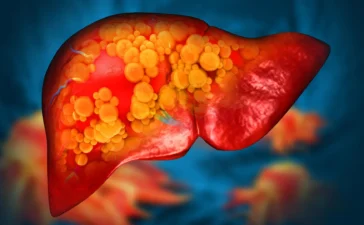
Binge drinking just once a month may triple your risk of liver scarring
LOS ANGELES — People may assume that if they drink lightly during the week or month, heavy drinking on the occasional Friday or Saturday may not cause...
Scientists found a baby dinosaur hidden in rock and it is surprisingly cute
In South Korea, a playful green cartoon dinosaur named Dooly, known for the two small tufts of hair on his...
This hidden state of water could explain why life exists
Researchers at Stockholm University have used advanced x-ray lasers to uncover a long-suspected feature of water: a critical point that...

This cow uses tools like a primate—and scientists are stunned
In 1982, cartoonist Gary Larson introduced a famous Far Side comic called Cow Tools. The illustration showed a cow proudly...


