





 Max T. at Maximum Progress shows that between 1992 and 2003 US literacy rates fell dramatically within every single educational category but the aggregate literacy rate didn’t budge. A great example of Simpson’s Paradox! The easiest way to see how this is possible is just to imagine that no one’s literacy level changes but everyone moves up an educational category. The result is zero increase in literacy but falling literacy rates in each category.
Two interesting things follow. First, this is very suggestive of credentialing and the signaling theory of education. Second, and more originally, Max suggests that total factor productivity is likely to have been mismeasured. Total factor productivity tells us how much more output can we get from the same inputs. If inputs increase, we expect output to increase so to measure TFP we must subtract any increase in output due to greater inputs. It’s common practice, however, to use educational attainment as a (partial) measure of skill or labor quality. If educational attainment is just rising credentialism, however, then this overestimates the increase in output due to labor skill and underestimates the gain to TFP.
This does not imply that we are richer than we actually are–output is what it is–but it does imply that if we want to know why we haven’t grown richer as quickly as we did in the past we should direct less attention to ideas and TFP and more attention to the failure to truly increase human capital.
The post Literacy Rates and Simpson’s Paradox appeared first on Marginal REVOLUTION.

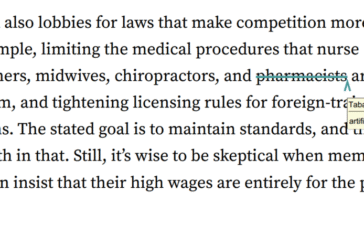
Revising Modern Principles
Here’s a revision I made to Modern Principles, my textbook with Tyler. Some things change dramatically, some things never change....

Greg Mankiw’s Blog: Thank you, AEA
About Me Name: Greg Mankiw Location: United States I am the Robert M. Beren Professor of Economics at Harvard University....
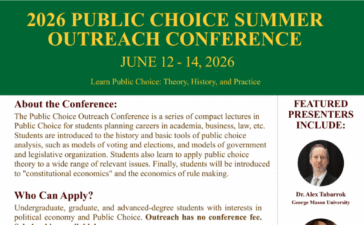
The Public Choice Outreach Conference!
The annual Public Choice Outreach Conference is a crash course in public choice. The conference is designed for undergraduates and...
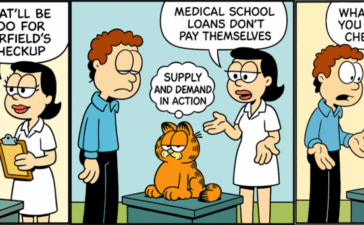
Marginal Garfield
Marginal Garfield generates an original Garfield cartoon every day based on posts from Marginal Revolution! Here is the first strip....


